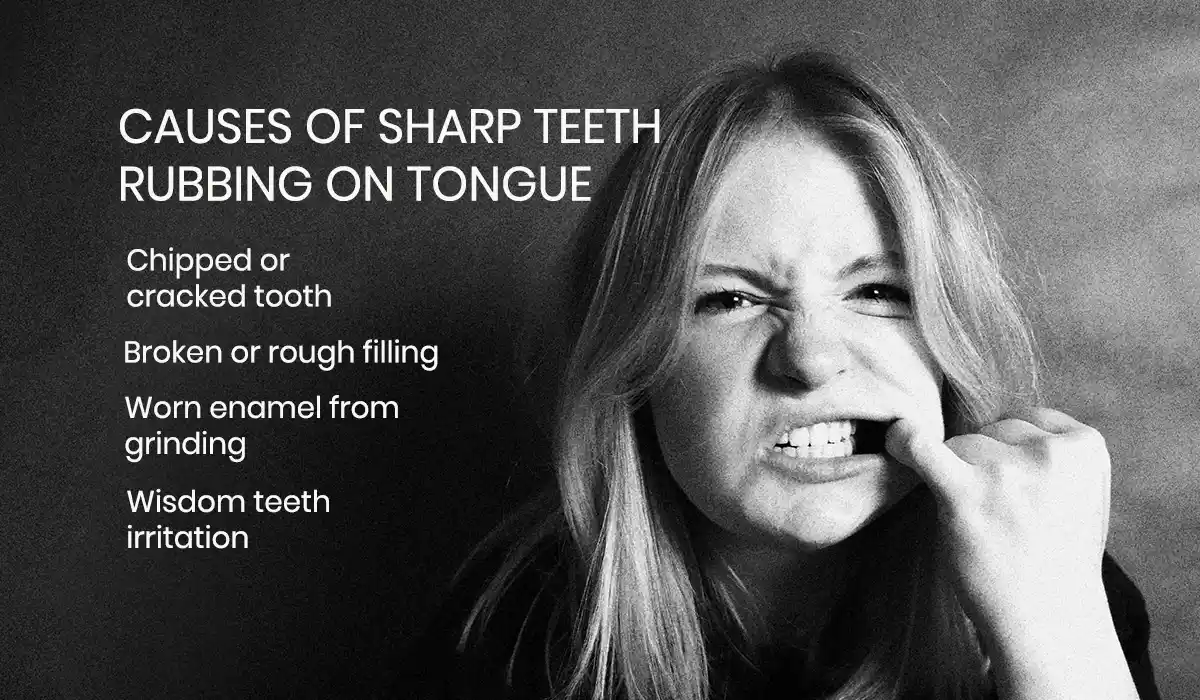
If a sharp tooth keeps rubbing against your tongue, the problem is almost never your tongue. It’s usually the tooth.
A rough edge, chipped enamel, worn filling, cracked tooth, or even a perfectly healthy tooth that has gradually changed shape can repeatedly scrape the same spot. Because your tongue moves thousands of times every day while talking, eating, and swallowing, even a tiny rough edge can become surprisingly painful.
The good news is that most sharp teeth can be corrected quickly. What matters is figuring out why the edge became sharp in the first place. Smoothing the tooth without understanding the cause sometimes means the problem simply returns a few months later.
Why Does a Sharp Tooth Hurt the Tongue So Much?
The tongue heals quickly, but it’s also one of the most sensitive tissues in the body.
Every meal, every conversation, every sip of water causes it to move across your teeth. When there’s one rough point, your tongue naturally keeps finding it almost like rubbing your finger over a paper cut without realizing it.
Dentists see this often. Patients sometimes believe they have a tongue ulcer or even worry about something serious, but the real culprit is a tiny edge on a back molar that they didn’t even know existed.
One rough tooth can create:
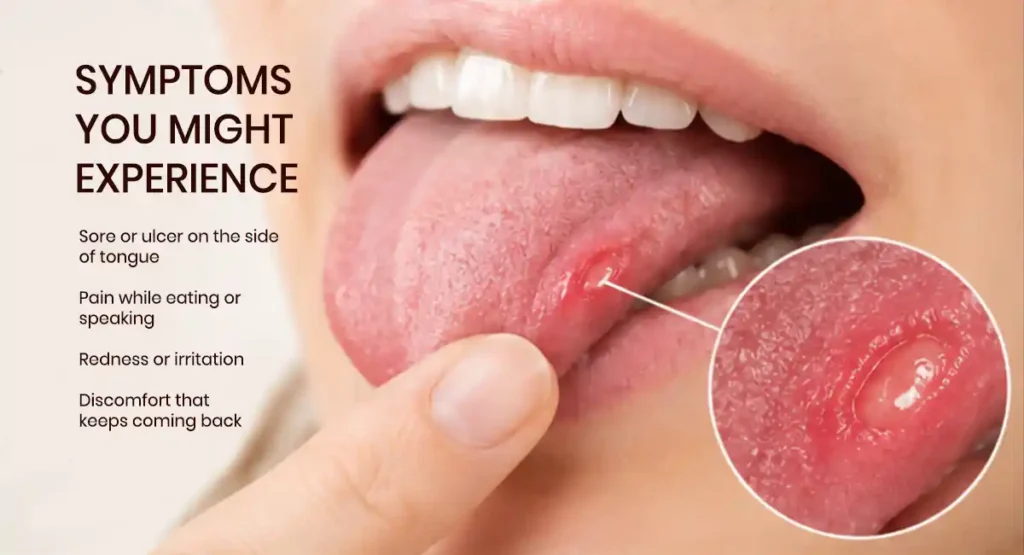
- A sore spot that never seems to heal
- Burning during spicy or acidic foods
- Small white patches where irritation keeps occurring
- Pain when speaking for long periods
- A constant feeling that something is stuck against the tongue
Common Causes of Sharp Teeth Rubbing on Tongue
A Chipped Tooth
This is easily the most common reason.
Sometimes the chip happens after biting ice or hard candy.
Other times it occurs so gradually that people never notice until their tongue starts catching on the edge.
Small enamel chips may not hurt the tooth itself because enamel contains no nerves. Your tongue notices them long before you do.
Broken Fillings
Old fillings don’t always fall out.
Sometimes they simply wear down or fracture at one corner.
That broken edge can feel almost invisible with your finger but extremely sharp against soft tissue.
Worn Enamel
Many people grind their teeth during sleep without knowing it.
Over years, grinding doesn’t always flatten teeth evenly. Some areas become thin while others develop knife-like enamel ridges.
Dentists often spot this pattern immediately because multiple teeth show similar wear.
Cracked Teeth
Tiny cracks don’t always cause tooth pain.
Instead, part of the enamel slightly shifts under pressure, creating a rough surface that continually rubs the tongue.
This is one reason dentists sometimes investigate seemingly minor tongue irritation more carefully.
Wisdom Teeth
Partially erupted wisdom teeth are surprisingly good at irritating the side of the tongue.
They may sit at unusual angles where only one sharp cusp touches the tongue during chewing.
Teeth Worn by Acid
Frequent acid exposure from reflux, frequent fizzy drinks, citrus, or stomach acid can soften enamel over time.
Instead of smooth wear, some teeth develop uneven edges that feel surprisingly rough.
Sharp Tooth Hurting Tongue: When It’s More Than Just an Irritation
A sharp tooth hurting the tongue isn’t automatically an emergency.
But repeated trauma changes how tissue heals.
Instead of healing completely, the tongue keeps reopening the same tiny wound.
After weeks, patients often describe:
- A sore that disappears then returns
- Pain only while eating
- White borders around the irritated area
- Slight swelling beside one tooth
- A rough patch that always appears in exactly the same location
The location matters.
If the sore always lines up with one tooth, dentists usually examine the tooth before assuming the tongue itself is the problem.
Can a Sharp Tooth Cause Tongue Ulcers?
Yes.
Many mouth ulcers aren’t caused by illness at all.
Mechanical trauma constant rubbing is a very common cause.
The difference is subtle.
A typical canker sore often appears randomly.
A traumatic ulcer usually matches the shape or position of the offending tooth.
If the tooth is corrected, healing often begins within several days.
If the ulcer continues beyond two weeks after removing the irritation, it deserves further examination rather than simply waiting longer.
This approach is also recommended by organizations such as the American Dental Association (ADA) and the Oral Health Foundation, which advise persistent oral sores to be professionally assessed.
Sharp Teeth Rubbing on Tongue Home Remedies
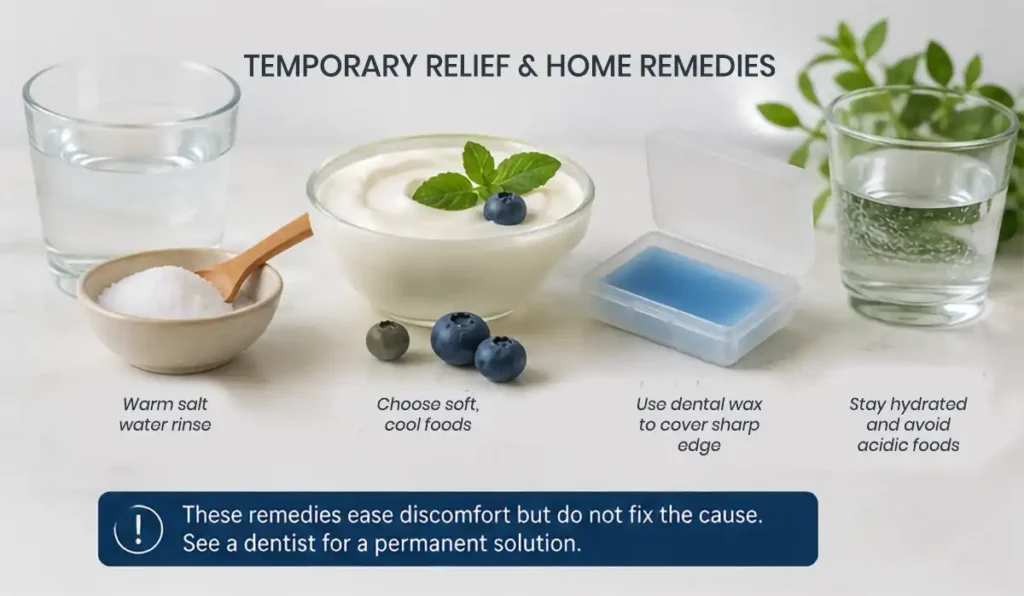
Home remedies can reduce irritation, but they don’t remove the sharp edge itself.
Think of them as buying healing time rather than fixing the cause.
Warm Salt Water
Probably the simplest option.
A gentle rinse several times daily helps keep the irritated area clean and may reduce discomfort.
Avoid making the solution excessively salty.
Cold Foods
Cold yogurt, smoothies, or chilled water temporarily numb sensitive tissue.
Many patients naturally gravitate toward softer, cooler foods while healing.
Avoid Acidic Foods
Orange juice.
Tomatoes.
Pineapple.
Hot sauces.
These don’t create the injury but they make every scrape feel much worse.
Switch Chewing Sides
Sounds obvious.
Yet people often continue chewing on the irritated side out of habit.
Giving the tongue fewer opportunities to hit the sharp tooth genuinely helps.
Stay Hydrated
Dry mouths create more friction.
Saliva naturally lubricates the tongue against teeth.
Even mild dehydration makes rough edges feel rougher.
Dental Wax for Sharp Tooth
Dental wax isn’t just for braces.
It can temporarily cover a rough edge until you see a dentist.
Roll a small amount between clean fingers and gently press it over the offending tooth.
It usually lasts through a meal or several hours before needing replacement.
This is particularly useful if:
- You’re travelling
- Your dentist appointment is tomorrow
- A filling chipped during the weekend
- The tongue is already quite sore
It isn’t a permanent repair.
Eventually the wax loosens, especially while eating.
How to Dull a Sharp Tooth
People often search for ways to smooth a tooth themselves.
Here’s the honest answer:
You really shouldn’t.
Online advice sometimes suggests nail files, sandpaper, or metal files.
Dentists strongly discourage this.
Why?
Because enamel isn’t like a fingernail.
Removing too much changes the bite permanently.
You may expose softer dentin underneath.
The tooth can become more sensitive than before.
If the sharpness is from a crack rather than simple enamel, filing may actually worsen it.
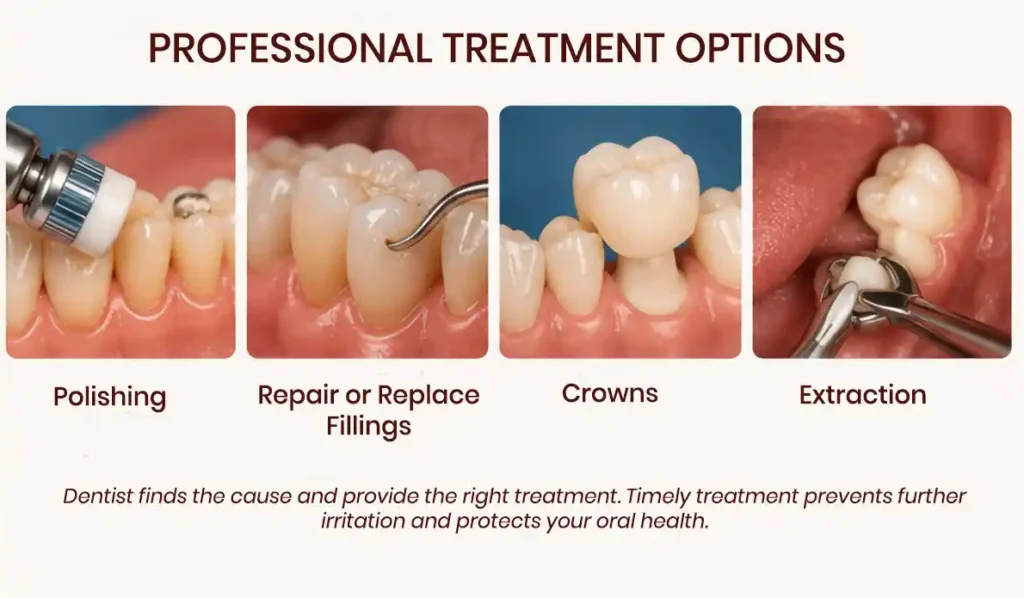
Professional polishing removes only tiny amounts while preserving the tooth’s natural shape.
It usually takes just a few minutes.
What Your Dentist Looks For
The appointment is often simpler than patients expect.
Instead of immediately smoothing the tooth, dentists first ask:
- Did this appear suddenly?
- Has the tooth had previous treatment?
- Do you grind your teeth?
- Does it hurt when biting?
- Has the tongue sore stayed in exactly one place?
Those answers often reveal more than the tooth itself.
The dentist then checks:
| Finding | Possible Treatment |
|---|---|
| Minor enamel chip | Gentle polishing |
| Broken filling | Replace filling |
| Large fracture | Crown or restoration |
| Cracked tooth | Depends on crack depth |
| Grinding damage | Night guard plus smoothing |
| Wisdom tooth irritation | Monitoring or extraction |
Sometimes the Tooth Isn’t Actually Sharp
This surprises many people.
The tongue can become hypersensitive after several days of irritation.
Even after the tooth is corrected, patients sometimes continue feeling that it’s sharp.
Usually the tooth is smooth.
The tongue simply hasn’t healed yet.
That lingering sensation often settles within several days as the tissue repairs itself.
Small Signs That Suggest You Shouldn’t Wait
Arrange a dental visit sooner if you notice:
- Bleeding every day from the same area
- Difficulty swallowing
- Swelling around the tooth
- A loose tooth
- Sharp pain when biting
- Pus or bad taste
- A tongue sore lasting longer than two weeks
These symptoms deserve proper examination rather than another week of home remedies.
Why Sharp Edges Sometimes Keep Coming Back
Repeated sharp edges usually point toward another problem.
Dentists often investigate:
Night Grinding
One polishing appointment won’t help if grinding continues nightly.
Weak Fillings
Repeated fractures may mean the remaining tooth no longer supports another filling.
Bite Problems
Some teeth receive far more pressure than others.
Over years, they chip repeatedly.
Sometimes adjusting the bite prevents future fractures.
Acid Wear
If stomach acid or dietary acid is continuously weakening enamel, polishing alone isn’t enough.
Managing the underlying cause protects future tooth structure.
Preventing Sharp Teeth in the Future
You can’t prevent every chipped tooth.
You can reduce the chances considerably.
- Wear a custom mouthguard if you grind your teeth.
- Don’t chew ice, pen caps, or hard sweets.
- Treat cracked fillings before they break completely.
- Attend regular dental examinations.
- Manage acid reflux if present.
- Avoid using teeth to open packaging.
Most sharp edges don’t appear overnight.
They’re often small changes that gradually worsen until your tongue finally notices.
FAQ
No. The tongue may heal temporarily, but the tooth won’t smooth itself. The sharp edge usually remains until it’s professionally treated.
No. It could be a broken filling, worn enamel, a crack, or even an erupting wisdom tooth.
No. Dental wax is only a temporary barrier that protects the tongue until dental treatment.
Your tongue constantly scans your mouth without you noticing. Once irritated, it becomes even more aware of that exact spot.
It’s not recommended. Removing enamel incorrectly can permanently damage the tooth or expose sensitive layers underneath.
Why Choose RP Advanced Dental and Implant Centre?
At RP Advanced Dental and Implant Centre, treatment starts with understanding why a tooth became sharp not simply smoothing it and sending you home. A chipped edge might only need gentle polishing, but it could also be the first sign of a cracked tooth, a failing filling, teeth grinding, or changes in your bite. Identifying the underlying cause helps reduce the chance of the same problem returning.
Our approach is practical and patient-focused. We explain what we’re seeing, discuss the treatment options in plain language, and recommend only what’s appropriate for your situation. Whether it’s a quick enamel adjustment, replacing a damaged restoration, or protecting your teeth from further wear, the goal is long-term comfort rather than a temporary fix.
If a sharp tooth is rubbing against your tongue or causing recurring sores, don’t ignore it. A short examination can often identify the source and provide relief much sooner than waiting for the area to heal on its own.
Book an appointment and have the problem properly assessed before a small irritation becomes a larger dental issue.