Yes but only to a point.
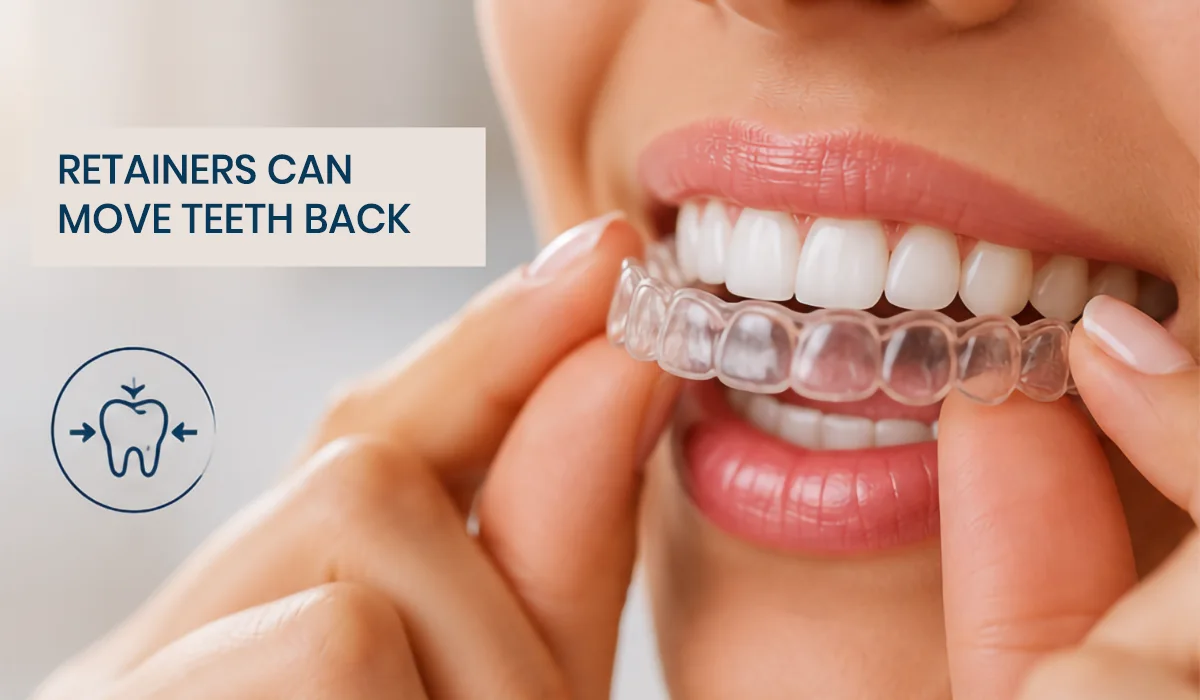
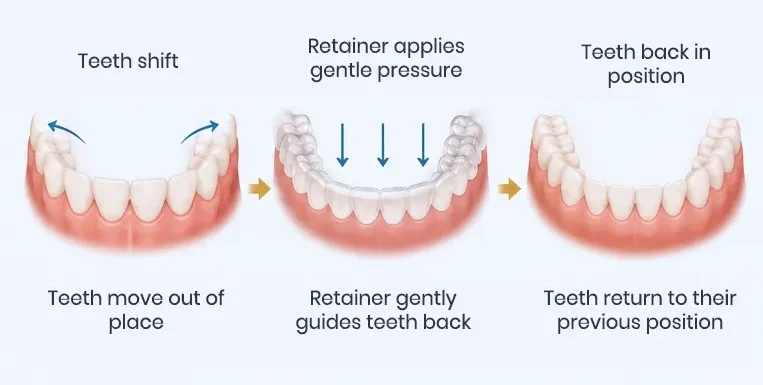
A retainer can often move teeth back if they’ve shifted slightly since orthodontic treatment. That’s because teeth don’t become permanently fixed after braces or aligners. The bone and surrounding ligament continue to adapt for months, and even years later, teeth naturally drift throughout life.
The important part is how much movement has happened. If a retainer still fits with only mild tightness, there’s a good chance it can guide teeth back into their previous position over several days or weeks. If it no longer fits or feels impossible to seat, forcing it isn’t a good idea. At that stage, a dentist or orthodontist may recommend a new retainer, clear aligners, or limited orthodontic treatment instead.
Many people assume retainers simply “hold” teeth. In reality, they can create small orthodontic movements because they still apply gentle pressure when a tooth has drifted slightly. They just aren’t designed to correct moderate or severe crowding.
Why teeth move even after braces
One of the biggest surprises for patients is learning that teeth never completely stop moving. The American Association of Orthodontists explains that retainers are necessary because teeth naturally tend to shift after orthodontic treatment, even when treatment has been successful.
This isn’t because braces failed. It’s because the mouth is constantly changing.
Things that influence tooth movement include:
- Natural aging of the jaw
- Everyday chewing forces
- Grinding or clenching
- Wisdom teeth pressure (although not usually the main cause of crowding)
- Changes in bone around the teeth
- Skipping retainer wear
Lower front teeth are especially prone to crowding as people get older. Even people who never had braces can notice this gradual change.
Can retainers move teeth back without braces?
Sometimes, yes.
If your teeth have only shifted a millimeter or two, wearing your original retainer consistently may reverse that movement. Many orthodontists actually expect this to happen after patients miss wearing their retainer for a short period.
Think of it like putting on shoes after your feet swell slightly. They feel tight at first but become comfortable again once everything settles. A retainer works in a similar way—within limits.
A retainer is more likely to move teeth back if:
- It still fits completely.
- It only feels tight for the first few minutes.
- You stopped wearing it recently.
- The movement is minor.
It is much less likely to work if:
- It won’t fully seat.
- One side lifts up.
- You need to bite hard just to get it on.
- It causes sharp pain instead of pressure.
Those are signs the teeth have moved beyond what the retainer was made to correct.
How much movement can a retainer actually correct?
There isn’t an exact measurement because every case is different, but here’s a practical guide.
| Situation | Can the original retainer help? |
|---|---|
| Slight spacing | Often yes |
| One tooth rotated slightly | Sometimes |
| Mild relapse after missing a few weeks | Usually |
| Several crowded teeth | Unlikely |
| Large bite changes | No |
| Teeth shifted enough that retainer won’t fit | Usually not |
The biggest mistake people make is trying to force an old retainer onto significantly shifted teeth. Excessive pressure can damage the appliance or place unhealthy forces on teeth.
Can retainers move teeth back after not wearing them?
This depends far more on how much the teeth moved than on how long you stopped wearing the retainer.
Someone who skipped their retainer for three months might have almost no relapse.
Another person could notice obvious crowding after only a few weeks.
Dentists pay much more attention to the fit of the retainer than the calendar.
A retainer that slides into place with mild pressure is usually encouraging.
One that cannot seat properly tells a different story.
Many orthodontists recommend wearing a slightly tight retainer overnight for several nights if it still fits completely. If discomfort becomes significant or the retainer never seats fully, it should be checked professionally instead of forcing it.
Can retainers move teeth back after 6 months?
Six months sounds like a long time, but it doesn’t automatically mean the answer is no.
Some patients wear their old retainer after six months and find it still fits surprisingly well.
Others discover it no longer comes close.
After six months, several things may have happened:
- Bone has adapted around the new tooth positions.
- Teeth may have rotated.
- Bite changes may have developed.
- The retainer itself may have warped if stored improperly.
If your retainer still fits with gentle pressure, your dentist may advise wearing it on a structured schedule.
If not, clear aligners are often the simplest way to correct mild relapse without repeating full braces.
What the first few days usually feel like
People often worry that a tight retainer means something is wrong.
Usually, that’s not the case.
A properly fitting retainer correcting small relapse often feels:
- Tight for 15–30 minutes
- Slightly sore the next morning
- More comfortable after several days
- Noticeably easier to insert within a week
Pain that continues for hours, visible tooth movement while wearing it, bleeding gums, or an inability to fully seat the retainer should be assessed instead of ignored.
What dentists notice when checking a retainer
Retainers don’t move every tooth equally.
The teeth that shifted the most usually receive most of the pressure.
That’s why one front tooth may feel sore while the rest feel perfectly normal.
Patients sometimes think the retainer is “only working on one tooth.” In reality, it’s simply contacting the tooth that drifted the furthest.
Dentists also look for tiny pressure marks inside clear retainers. These marks often reveal exactly which teeth have moved before they’re even obvious to the patient.
When a new retainer is enough and when it isn’t
Sometimes people request a replacement because their old retainer cracked.
If impressions or a digital scan are taken after the teeth have already shifted, the new retainer will simply maintain the shifted position.
It won’t move teeth back.
That’s why orthodontists sometimes recommend short-term aligner treatment before making a replacement retainer.
It’s a small distinction, but it explains why two people with “new retainers” can have completely different outcomes.

When you should stop trying at home
Stop wearing an old retainer and arrange a dental appointment if:
- It doesn’t fully fit.
- You notice cracks or distortion.
- Teeth feel unusually loose.
- The bite feels dramatically different.
- You experience persistent pain rather than mild pressure.
Trying harder rarely solves these situations.
Usually, it only delays the proper solution.
Frequently Asked Questions
Sometimes. If the movement is very small and the retainer still fits correctly, it may guide that tooth back.
Only if your dentist or orthodontist recommends it. Most people start with overnight wear unless given different instructions.
Mild pressure is common. Significant pain or a retainer that won’t fit properly isn’t.
A properly fitting retainer usually won’t. One that is warped, cracked, or forced into place can create unnecessary pressure.
Why choose RP Advanced Dental and Implant Centre?
If your retainer no longer fits or you’ve noticed your teeth shifting, the first step isn’t automatically getting braces again. A careful examination can determine whether your existing retainer can still be used, whether a replacement is appropriate, or whether a small amount of orthodontic treatment would give a better long-term result.
RP Advanced Dental and Implant Centre takes a conservative approach whenever possible. Every assessment begins by identifying the cause and extent of the relapse before recommending treatment. In many cases, minor tooth movement can be managed with simple solutions, while more noticeable changes may be better corrected with clear aligners or other orthodontic options. The focus is on choosing the treatment that makes sense for your situation not more treatment than you need.
If you’ve noticed your retainer becoming tighter, your teeth shifting, or you’re unsure whether your current retainer is still doing its job, arranging an assessment sooner rather than later can make treatment simpler. Visit our clinic or schedule an appointment with our team.